
8 Days • 7 Nights
Highlights of Kenya: Amboseli, Nakuru & the Masai Mara
Tour Includes
About the Trip
Trip Highlights
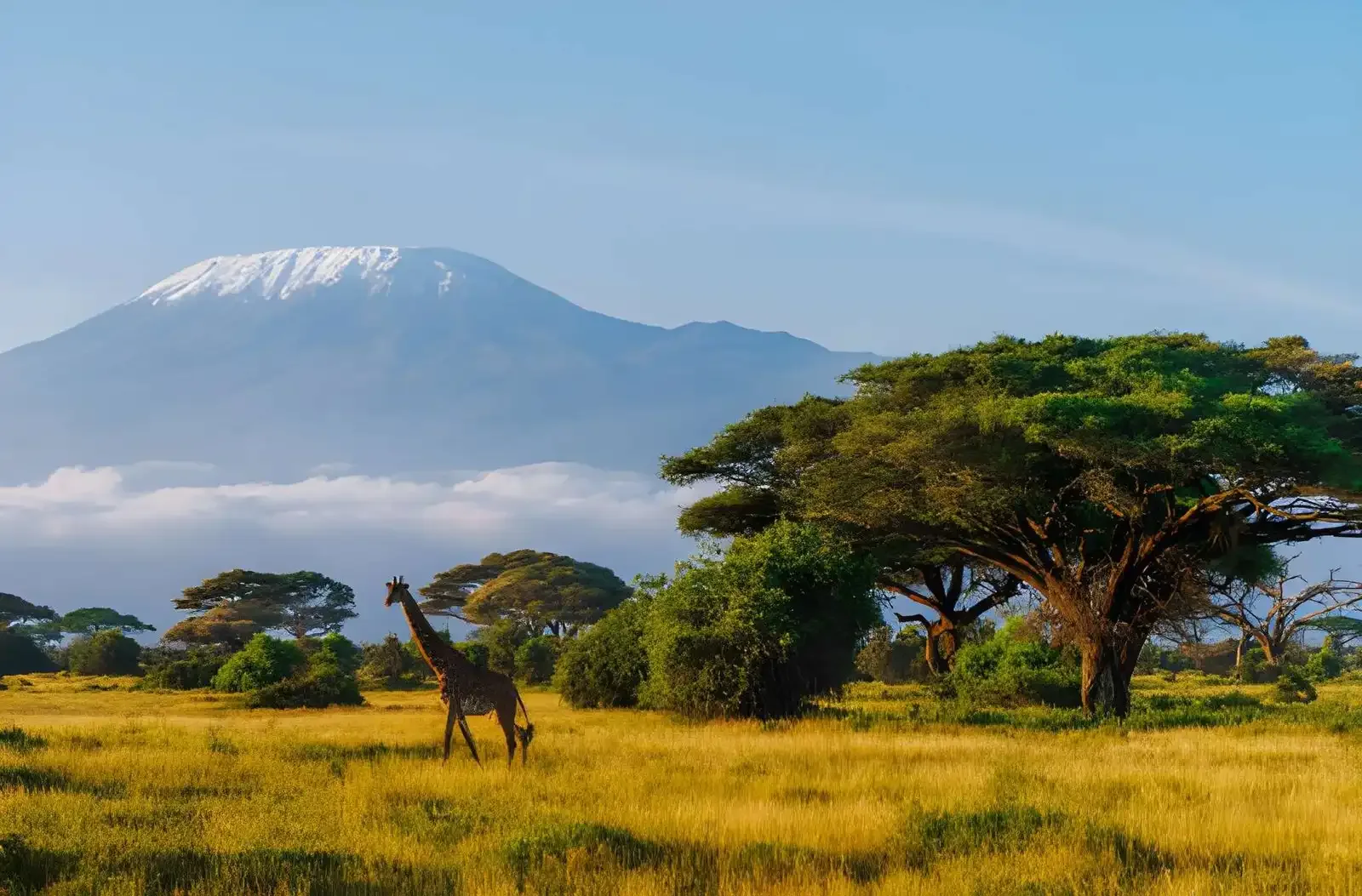
- Elephants beneath the snows of Mount Kilimanjaro in Amboseli are an unforgettable highlight of this journey. Amboseli National Park, in the far south of Kenya, is one of the most beautiful and iconic wildlife settings in Africa, a landscape of open plains, seasonal swamps and dust-devils framed by the vast, snow-capped bulk of Mount Kilimanjaro rising just across the Tanzanian border. Amboseli is famous above all for its large, relaxed herds of elephants, among the most studied in the world, which you watch at close range as they cross the plains, bathe in the swamps and raise their calves.
- Flamingos, rhino and forest at Lake Nakuru in the Great Rift Valley are a beautiful highlight. Lake Nakuru National Park, set in the floor of the dramatic Great Rift Valley and ringed by acacia forest, escarpments and yellow-barked fever trees, is one of Kenya's loveliest parks. The soda lake is famous for its birdlife, at times fringed by great gatherings of pink flamingos, along with pelicans and countless other waterbirds. Nakuru is also a rhino sanctuary, one of the best places in Kenya to see both black and white rhino, and a stronghold of the rare Rothschild's giraffe, alongside lion, leopard, buffalo and waterbuck.
- The legendary Masai Mara, with its lions, cheetahs and endless plains, is the spectacular heart of this journey. The Masai Mara National Reserve, Kenya's most famous wildlife area and the northern extension of the Serengeti ecosystem, is a vast expanse of rolling golden grassland dotted with acacias and crossed by the Mara and Talek rivers. It offers some of the finest big-cat viewing on earth, with strong prides of lion, cheetahs hunting on the open plains, and elusive leopard, alongside elephant, buffalo, giraffe, hippo, and immense herds of plains game. On unhurried game drives with expert guides you seek out these animals across the savannah.
- The Great Migration, in season, is one of the greatest wildlife spectacles on earth. From roughly July to October, in a natural rhythm that no calendar can guarantee, over a million wildebeest and hundreds of thousands of zebra and gazelle pour north from the Serengeti into the Masai Mara in search of fresh grazing, in the culmination of the Great Migration. The plains fill with vast, restless herds, and at the Mara and Talek rivers the animals mass on the banks before plunging across in dramatic, crocodile-lined crossings, one of nature's most primal dramas. Predators shadow the herds, and the sense of abundance is overwhelming.
- The proud Maasai and their timeless culture add a rich human dimension to this journey. The Maasai, one of Africa's most iconic peoples, have herded cattle across the plains of southern Kenya for centuries, and their striking red shukas, beadwork, dance and deep knowledge of the land are woven through the landscapes of Amboseli and the Mara. On a visit to a Maasai village (manyatta), warmly and respectfully arranged, you meet families, learn about their pastoral way of life, cattle, homes and customs, watch the famous jumping dance, and see intricate beadwork, gaining a genuine window into a living culture.
- Above all, this journey offers the very best of Kenya's wildlife, landscapes and cultures in one spectacular week. Kenya is the birthplace of the safari and one of the finest wildlife destinations on earth, and this journey takes in its greatest highlights. Over eight days you watch elephants beneath Kilimanjaro in Amboseli, see flamingos and rhino at Lake Nakuru in the Great Rift Valley, and explore the legendary Masai Mara with its big cats, endless plains and, in season, the Great Migration, meeting the proud Maasai along the way. Guided by expert driver-guides in custom 4x4 vehicles and staying in characterful lodges and camps.
Day by Day
A detailed day-by-day plan for this 8-day journey.
Your Kenyan safari begins as your flight arrives at Jomo Kenyatta International Airport in Nairobi, the vibrant capital, where you are met and transferred to your hotel. Kenya is the birthplace of the safari and one of the most rewarding wildlife destinations on earth, and the warmth of the Kenyan welcome is felt from the moment you arrive. Spend the rest of the day settling in and relaxing after your journey, perhaps enjoying the gardens or pool at your hotel. This evening you might dine at one of Nairobi's celebrated restaurants and meet your guide for a briefing on the spectacular journey ahead, through Amboseli, Lake Nakuru and the legendary Masai Mara. As you settle in, the anticipation of the great parks and their wildlife begins to build. Rest well, ready to head south to Amboseli and Kilimanjaro tomorrow.
This morning you leave Nairobi and journey south across the plains towards Amboseli National Park, in the far south of Kenya on the Tanzanian border. As you approach, the vast, snow-capped bulk of Mount Kilimanjaro, Africa's highest mountain, rises ahead across the plains, one of the continent's most iconic sights. You arrive at your lodge or camp in time for lunch, then set out on an afternoon game drive into the park, famous above all for its large, relaxed herds of elephants moving across the open plains and seasonal swamps beneath the mountain. You also look for lion, cheetah, buffalo, giraffe, zebra and a wealth of birdlife, all framed by Kilimanjaro. As the light softens to gold, the elephants and the mountain are unforgettable. Rest well at your Amboseli camp, deep in this iconic landscape.
Today is devoted to Amboseli, one of the most beautiful and iconic wildlife settings in Africa. You set out on a morning game drive in the cool early light, when Kilimanjaro is often at its clearest, its snows glowing above the plains, and the elephants are active. Amboseli's elephants are among the most studied in the world, and you watch great herds at close range as they cross the plains, bathe and feed in the swamps, and raise their calves. You also seek out lion, cheetah, buffalo, giraffe and countless birds around the wetlands. After a relaxed midday break at your lodge, you head out again for an afternoon and evening drive, perhaps climbing Observation Hill for a sweeping view over the swamps and plains. As the sun sets behind Kilimanjaro, the scene is breathtaking. Rest well at Amboseli.
This morning, after a final look at Amboseli and Kilimanjaro, you begin the scenic journey north, climbing out of the southern plains and crossing the floor of the Great Rift Valley, one of the great geological wonders of the world, with dramatic escarpments and viewpoints along the way. You arrive at Lake Nakuru National Park, set in the Rift Valley floor and ringed by acacia forest, fever trees and escarpments, in time for an afternoon game drive. Nakuru is a rhino sanctuary, one of the best places in Kenya to see both black and white rhino, and a stronghold of the rare Rothschild's giraffe. The soda lake, famous for its birdlife, is at times fringed with pink flamingos and pelicans, and you also look for lion, leopard, buffalo and waterbuck. Rest well beside beautiful Lake Nakuru.
This morning you enjoy a final game drive at Lake Nakuru, looking again for rhino, Rothschild's giraffe, flamingos and the many birds of the lakeshore, before continuing your journey towards the legendary Masai Mara. You travel across the highlands and down into the vast rolling grasslands of the Mara, Kenya's most famous wildlife area and the northern extension of the great Serengeti ecosystem, arriving at your camp in time for lunch. In the afternoon you set out on your first game drive across the golden plains, dotted with acacias and alive with wildlife, seeking out the Mara's powerful lion prides, cheetahs, elephants, buffalo, giraffe and immense herds of plains game. The sense of space and abundance is extraordinary. As the sun sets over the savannah, you return to camp. Rest well in the heart of the legendary Masai Mara.
Today is a full day exploring the legendary Masai Mara, which offers some of the finest big-cat viewing on earth. You set out at dawn, when the plains are cool and the predators are active, seeking out lion prides resting after the night's hunt, cheetahs scanning the grasslands from a termite mound, and elusive leopard in the riverine forest. In season, the plains fill with the vast, restless herds of the Great Migration, and at the Mara and Talek rivers the wildebeest and zebra mass before plunging across in dramatic, crocodile-lined crossings, one of nature's most primal spectacles. You also see elephant, buffalo, giraffe, hippo and abundant plains game, guided by an expert who reads the savannah brilliantly. You may picnic in the bush and drive until the golden evening light. Rest well in the Masai Mara.
You have another full day in the Masai Mara, with time to explore its varied landscapes and, this morning, an optional dawn balloon safari drifting over the plains as the sun rises, followed by a champagne bush breakfast (optional). On your game drives you continue to seek out big cats, elephants and, in season, the Great Migration, perhaps returning to the rivers for another crossing. Today you also visit a Maasai village (manyatta), warmly and respectfully arranged, meeting families and learning about their timeless pastoral way of life, their cattle, homes and customs, watching the famous jumping dance and seeing intricate beadwork, a genuine window into a living culture. Many of your guides and camp staff are themselves Maasai. As the sun sets over the plains, you savour a final evening on safari. Rest well in the beautiful Masai Mara.
After a final early morning game drive in the Masai Mara, savouring a last look at the golden plains and their wildlife, you return to camp for breakfast and then journey back to Nairobi, arriving in the capital in time for your onward international departure (a light-aircraft flight can be arranged to save time). You leave having experienced the very best of Kenya, the elephants and Kilimanjaro of Amboseli, the flamingos, rhino and Rift Valley beauty of Lake Nakuru, and the big cats, endless plains and, in season, the Great Migration of the legendary Masai Mara, along with the proud Maasai and their timeless culture. The images stay vivid long after you land, the elephants beneath the snows, the pink flamingos, and the lions on the golden plains. Kenya offers spectacular wildlife and beauty in abundance, and you depart already dreaming of a return.
Where You Will Travel
What's inside the package?
Inclusions
- 7 nights accommodation and full-board on safari with all meals at lodges and camps
- Game drives in custom 4x4 safari vehicles with pop-up roofs
- All national park and reserve conservation fees as per itinerary
- Airport and land transfers, and internal light-aircraft flights where specified
- Touring and game viewing with expert English-speaking driver-guides
- Bottled water in the safari vehicle and unlimited game drives as per itinerary
- Private touring with an expert driver-guide and custom 4x4 safari vehicle, all game drives, a Maasai village visit, an Amboseli, Lake Nakuru and Masai Mara safari, and all park and reserve conservation fees
Exclusions
- International airfare
- Visa or tourist card fees where applicable
- Travel insurance (strongly recommended)
- Balloon safari over the Masai Mara (optional)
- International and internal flights unless specified, and tips for guides and camp staff
- Meals not mentioned in the itinerary or inclusions
- Drinks unless specifically stated
- Optional excursions and experiences
- Personal expenses and gratuities
- Anything not specifically mentioned under Package Inclusions
Know when to go.
- Visa & entry: Most visitors need an Electronic Travel Authorisation (eTA), applied for online before travel; Kenya has moved to an eTA system for nearly all nationalities, and a passport valid for at least six months with blank pages is required. Requirements can change, so we confirm the exact current process for your nationality and help you complete the eTA application in good time
- Currency: The currency is the Kenyan Shilling (KES); US dollars are widely accepted at lodges, camps and for park fees, and cards work at hotels and larger establishments in Nairobi and Mombasa, but carry some cash and small dollar notes for tips, curios and remote areas. ATMs are common in cities and towns but scarce on safari
- Best time to visit: The long dry season from late June to October is superb for wildlife and coincides with the Great Migration in the Masai Mara; January and February are also excellent and hot. The long rains fall roughly April to May and short rains in November, when parks are green, lush and quieter, with fewer visitors and lower prices
- Language & etiquette: Swahili and English are the official languages, and English is widely spoken, making travel easy. Kenyans are warm and welcoming; a friendly Jambo goes a long way. Ask permission before photographing people, especially Maasai and Samburu communities, dress modestly in towns and on the coast, and respect local customs and dress at the Muslim coast
- Getting around: Safaris are by custom 4x4 vehicle with a pop-up roof and expert driver-guide, with some long but scenic drives on varied roads; light-aircraft flights link the Mara, Amboseli, Samburu and the coast quickly and comfortably on fly-in itineraries. Roads can be rough and dusty in the parks, so bring a light scarf and a small daypack
- Health & safety: A yellow fever certificate may be required depending on your route; malaria prophylaxis is recommended for most safari and coastal areas, so consult a travel clinic well before departure, and bring insect repellent, sun protection and any personal medication. Kenya is a rewarding, well-established safari destination, and we use trusted guides and follow official guidance
- Culture & tipping: Kenya is a warm, diverse country of many peoples, from the Maasai and Samburu to the Swahili coast; a village or community visit is a genuine highlight. Tipping is customary and appreciated, for driver-guides, camp and lodge staff and porters, and we advise on suggested amounts. Photography of airports and official buildings is best avoided
- Power & practicalities: Power is 240V with UK-style type G three-pin plugs, so bring an adapter; camps and lodges often run on generators or solar with limited hours and charging points, so a power bank is useful. Pack neutral-coloured, lightweight clothing, warm layers for cool early game drives, a hat, binoculars and a good camera with a zoom lens
Frequently Asked Questions
When can I see the Great Migration in the Masai Mara?
The Great Migration typically reaches the Masai Mara from roughly July to October, when over a million wildebeest and hundreds of thousands of zebra and gazelle pour north from the Serengeti, and the dramatic river crossings occur, though nature follows no fixed calendar and timing varies year to year with the rains. We plan migration-focused journeys for these months and position you in the best areas. Outside the migration, the Mara offers superb resident wildlife, especially big cats, all year round.
Is this safari suitable for first-time visitors to Africa?
Absolutely. This journey is a classic, well-rounded introduction to Kenya, taking in three of its greatest and most varied parks, Amboseli, Lake Nakuru and the Masai Mara, with iconic scenery, superb wildlife and a Maasai cultural visit, all at a comfortable pace with expert driver-guides and characterful lodges and camps. It is ideal for first-time safari-goers, offering the elephants and Kilimanjaro, the flamingos and rhino of the Rift Valley, and the big cats of the Mara in a single, spectacular week. We can adjust pace and comfort to suit you.
What meals are included?
Meals as specified in each itinerary are included; on safari, most lodges and camps operate on a full-board basis, so breakfast, lunch and dinner are typically included while you are in the parks and reserves, along with bottled water in the vehicle. In Nairobi and on the coast, breakfast is usually included and other meals may be free for you to explore. Kenyan cuisine is hearty and varied, from nyama choma (grilled meat) and ugali to fresh Swahili coast seafood and tropical fruit, and we detail exactly what is included at each stage.
Are the tours private or in a group?
Your safari is private by default, with your own expert English-speaking driver-guide and custom 4x4 vehicle with a pop-up roof, giving you flexibility, unhurried game viewing and a pace tailored to you; small-group and fly-in options can be arranged if you prefer. Kenya's knowledgeable guides are superb at finding and interpreting wildlife, from big cats to the Great Migration, and greatly enrich every game drive, cultural visit and journey through this beautiful country.
Do I need a visa for Kenya?
Most visitors need an Electronic Travel Authorisation (eTA), applied for online before travel, as Kenya has moved to an eTA system for nearly all nationalities. A passport valid for at least six months with blank pages is required. We confirm the exact, current requirements for your nationality, advise on the best approach, and help you complete the eTA application in good time so your entry is smooth and stress-free.
Is Kenya safe to visit?
Kenya is one of Africa's most established and rewarding safari destinations, welcoming visitors for decades, and travel on a well-planned itinerary is smooth and rewarding. We use trusted lodges, camps, guides and drivers, and follow official guidance at all times, taking sensible precautions in cities as anywhere. On safari and at the coast you are in expert, experienced hands, and the warmth of the Kenyan welcome is one of the great joys of a visit.
When is the best time to visit?
The long dry season from late June to October is superb for wildlife and coincides with the Great Migration in the Masai Mara, while January and February are also excellent and hot. The green seasons of the long rains (roughly April to May) and short rains (November) bring lush landscapes, newborn animals, wonderful birdlife and fewer visitors at lower prices. We advise on the best timing for your interests, whether the migration, big cats, birds or the coast.
Can the itinerary be customised?
Absolutely. We can adjust the balance of parks and reserves, add the Masai Mara, Amboseli, Samburu, Tsavo, Laikipia or the Rift Valley lakes, combine safari with the Swahili coast at Diani, Mombasa or Lamu, switch between driving and fly-in safaris, and tailor the standard of camps and lodges from classic to ultra-luxury. Every itinerary is a flexible starting point that we shape around your interests, pace, budget and dream safari through beautiful Kenya.
More Cultural Journeys
 Cultural
Customizable
Cultural
Customizable
Great Zimbabwe & Matobo: Culture, Rock Art & Rhino
Great Zimbabwe & Matobo: Culture, Rock Art & Rhino
Zimbabwe
 Cultural
Customizable
Cultural
Customizable
Grand Zimbabwe: The Complete Safari Journey
Grand Zimbabwe: The Complete Safari Journey
Zimbabwe
 Cultural
Customizable
Cultural
Customizable
Victoria Falls & Safari: Livingstone and the Luangwa
Victoria Falls & Safari: Livingstone and the Luangwa
Zambia